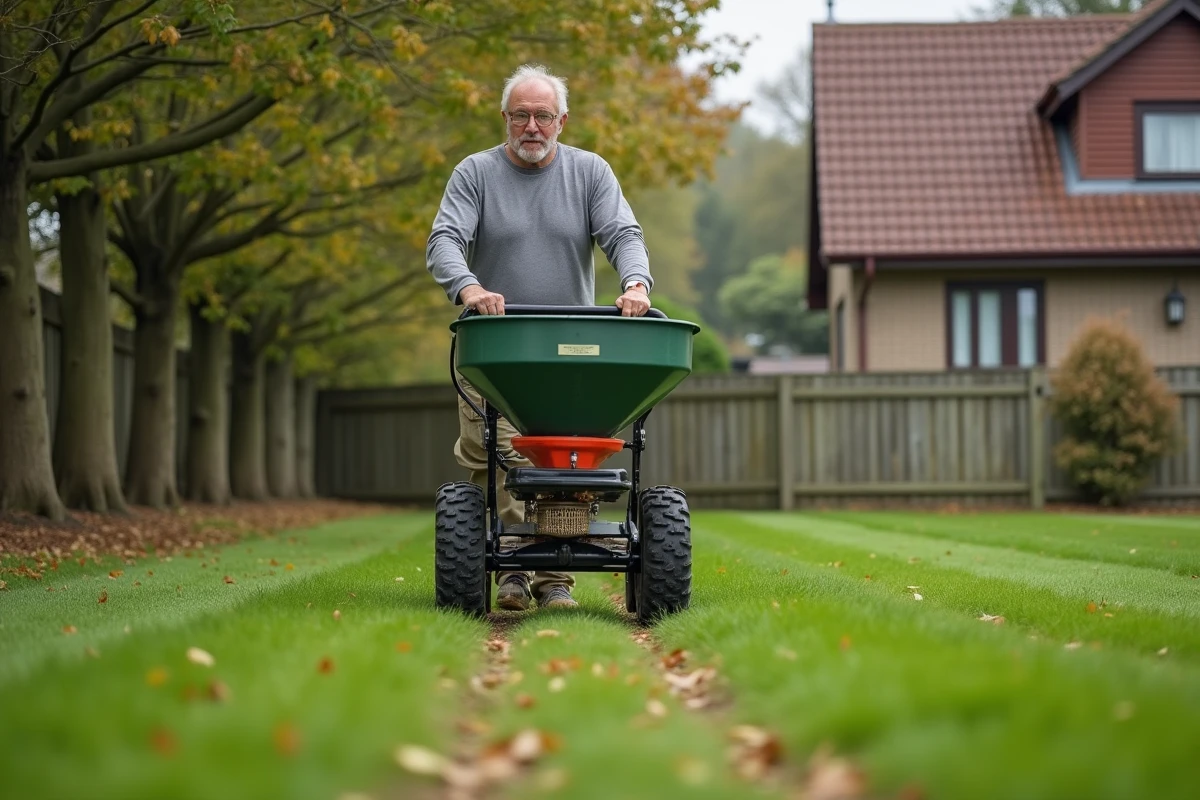
Seeding grass by broadcasting remains the most common method among homeowners. The result, however, largely depends on the consistency of the seeding and the burying of the seeds in the soil. This is where a thermal overseeder makes a difference: it combines seeding, burying, and rolling into a single pass, whereas the manual method involves three distinct operations with different tools.
Cross-seeding with a machine: how the technique changes the final result
Most tutorials describe a single pass in parallel lines. Manufacturers of overseeders and professional rental companies now recommend a double diagonal cross-seeding. The first pass deposits the seeds in one direction, while the second perpendicular pass completes the coverage. The resulting grass is denser, and the visible strips from the passes almost entirely disappear.
To achieve this, the seed rate must be reduced by half for each pass. The hopper of the overseeder is adjusted via a mechanical doser: by calibrating the amount per pass, one avoids over-seeding that suffocates germination while ensuring uniform coverage of the area.
This double pass increases the working time by about a third. On an average surface, the gain in grass density more than justifies this extra time, especially if the terrain has leveling irregularities. Field reports vary on this point for small, very flat areas, where a well-adjusted single pass may suffice.
Choosing a thermal grass seeder machine suitable for the size of the area remains the primary criterion: standard width rollers cover about 70 cm per pass, which is suitable for both residential gardens and larger spaces.
Soil preparation before using the thermal overseeder
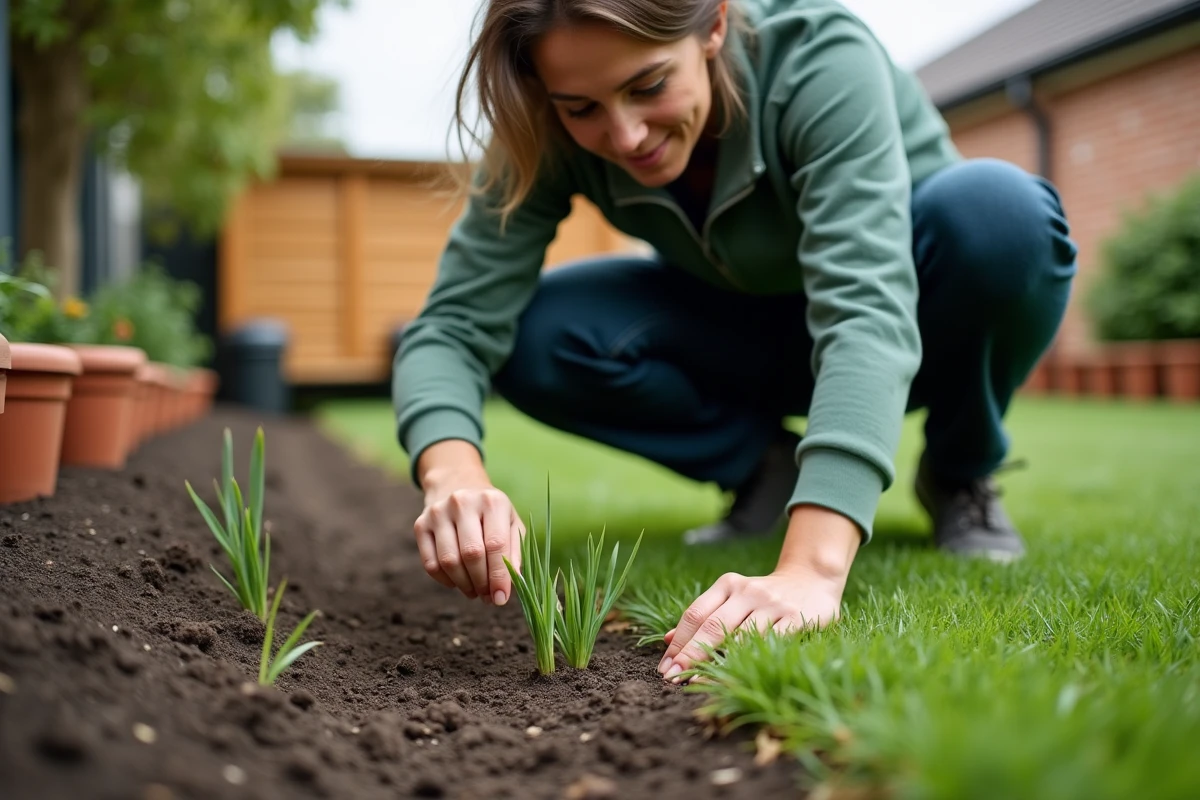
The overseeder does not replace soil preparation. It optimizes seeding, not tilling. The soil must be loosened beforehand, ideally to a sufficient depth so that the machine’s rotor can bury the seeds without hitting compact clumps.
What the machine expects from the terrain
The mesh roller at the front breaks up small residual clumps, but it cannot compensate for poorly prepared soil. Two points determine the result:
- The soil must be dried out, neither sticky nor dusty. Soil that is too wet clogs the seeder and prevents the rotor from rotating regularly.
- Surface stones and plant debris must be removed. They deflect the trajectory of the seeds and create voids in the seeding.
- The final leveling, done with a rake or harrow, corrects any dips where water would stagnate after watering, causing seed rot.
A properly leveled and dried soil ensures the consistency of the seeding, regardless of the type of machine used. The overseeder amplifies the quality of the preparation as much as it amplifies its flaws.
Mowing and maintenance after mechanical seeding: evolving practices
Achieving a dense lawn does not stop at seeding. The way of mowing in the weeks and months that follow directly influences the longevity of the machine-seeded grass.
Mowing height and water stress
Networks of garden centers and cooperatives now recommend higher mowing heights in summer, between 4 and 6 cm, to limit water stress and burns. This recommendation makes perfect sense after thermal seeding: the young shoots, still fragile, withstand heat better when the grass blade retains a sufficient length to protect the base of the plant.
In the shade, raising to 5 or 6 cm prevents the grass from thinning due to lack of light. These heights, still considered unusual a few years ago, are becoming the norm in the face of more frequent droughts.
Mulching and organic input
Several specialized maintenance guides recommend combining mechanical seeding with mulching mowing. A thermal mower equipped with a removable mulching kit finely shreds the cut blades and redeposits them on the soil. This natural mulch decomposes quickly, enriches the soil with organic matter, and reduces the need for chemical fertilizers.
Mulching works provided that mowing is done regularly, before the grass exceeds the ideal mowing height by more than a third. If the grass is too tall, the residues accumulate in clumps and suffocate the lawn instead of nourishing it.
Renting or buying a thermal overseeder: deciding based on area
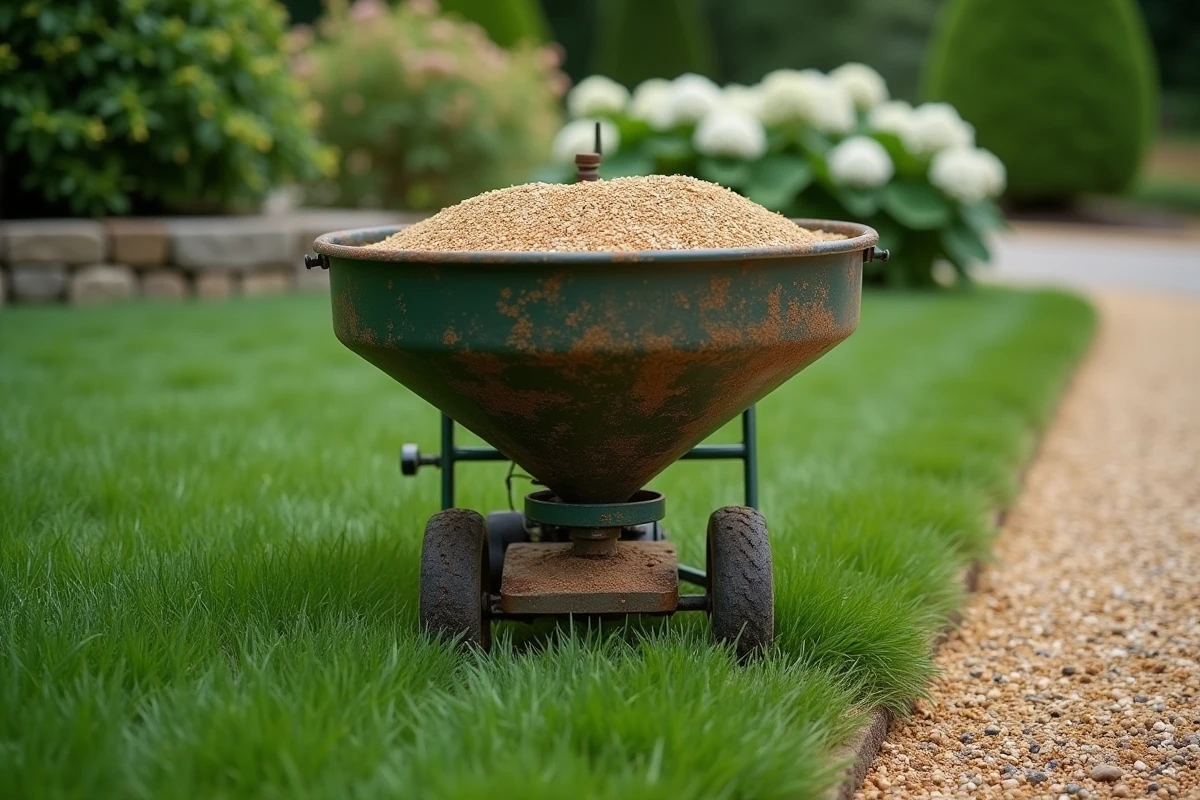
Rental companies for green space equipment are seeing a notable increase in the rental of thermal overseeders by individuals. These machines, once reserved for professional landscapers, are now offered for daily or weekend rental at most rental outlets.
Buying is justified for professionals or owners of very large areas who plan multiple seeding campaigns (creation and then reseeding). For a residential garden, renting remains the most sensible option: the overseeder is used intensively for a few hours, then only comes out of the garage months or even years later.
- Check the width of the rollers in relation to the area to be covered. Rollers that are too wide complicate maneuvering in narrow gardens or those cluttered with trees.
- Request a demonstration of the doser adjustment at the time of pickup. Poor calibration of the hopper wastes seeds or produces sparse grass.
- Plan the amount of seeds before renting. The machine time lost going to buy a bag of seeds increases the bill.
The choice between short-term rental and purchase depends on the number of passes planned over the lifespan of the grass. Reseeding every two or three years leans towards renting. Regular use of several plots makes the investment worthwhile.
The transition to a thermal overseeder transforms an approximate seeding into uniform coverage, provided that two often overlooked parameters are mastered: the doser adjustment and the preparation of the soil beforehand. The machine does the work, the terrain determines the result.