
Online beauty shopping is based on a simple paradox: the selection has never been wider, but the tools to sort through this selection remain underutilized by most shoppers. Between virtual try-on filters, ingredient databases, and varying return policies from one site to another, buying skincare or makeup online requires a method more than intuition.
Virtual Makeup Try-On: How to Use the Tools Without Making Mistakes
Several brands have deployed augmented reality solutions that allow you to test a lipstick or foundation directly from a screen. Perfect Corp., a major publisher of these technologies, reports in its Global Beauty Trend Report 2024 a significant increase in conversion rates when customers use these tools. The problem is that the result heavily depends on two variables that technology cannot control: ambient lighting and the color reproduction of the screen.
Specifically, a virtual try-on done under office fluorescent lights will not yield the same result as under natural light. Taking a photo near a window during the day before launching the tool radically changes the reliability of the test. Comparing the result on mobile and desktop also helps to spot color discrepancies related to the screen’s display.
The other pitfall concerns dark or highly saturated shades. Algorithms remain less accurate on darker skin tones, which can skew the choice of foundation or concealer. Testing several intensities of the same range, from lightest to darkest, allows you to gauge the margin of error of the tool before finalizing a cart.
For those who prefer to browse a catalog structured by product type rather than navigating between several tabs, shopping on Makeup Chic provides access to a selection organized by category of makeup and skincare.
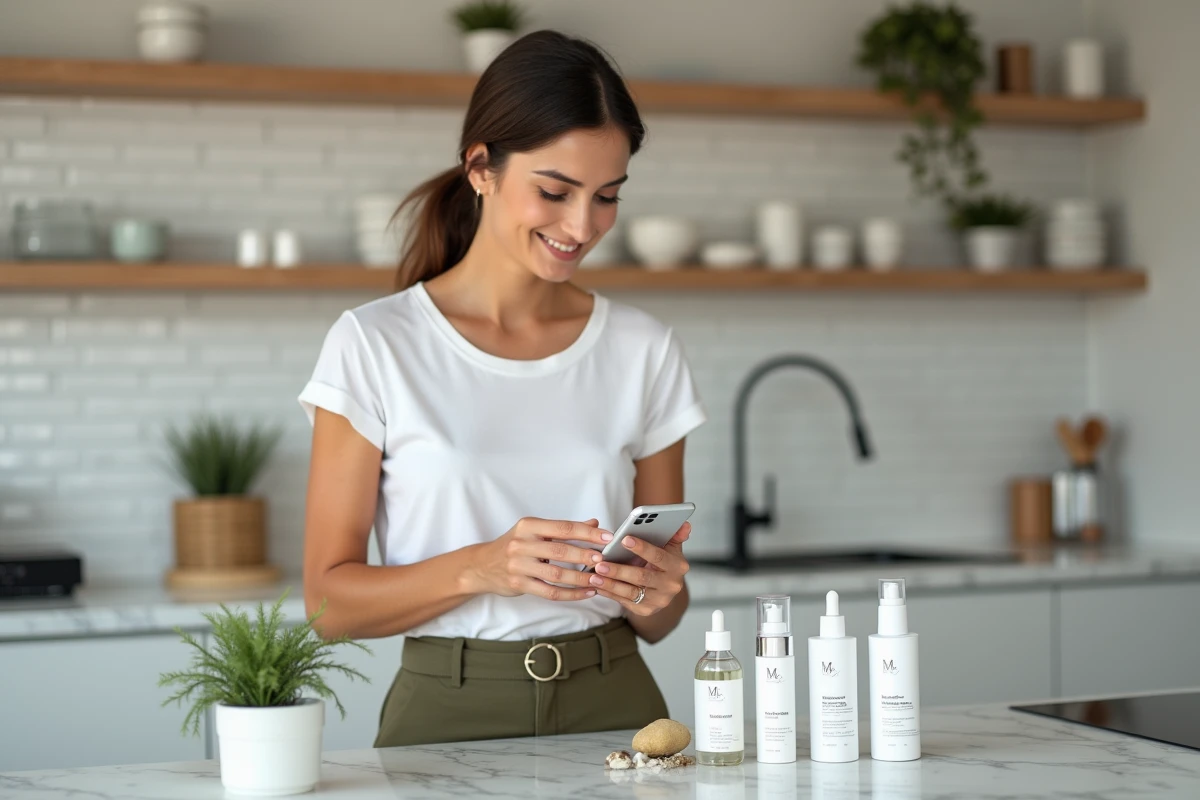
Decoding Cosmetic Ingredients with INCI Databases
The INCI list (International Nomenclature of Cosmetic Ingredients) appears on every product sheet, including online. Reading this list is akin to consulting the actual composition of a product, beyond the marketing spiel. In France, the INCI Beauty app, launched in 2017, has seen its number of scans increase significantly since the health crisis. It is regularly cited in the reports of 60 Millions de Consommateurs dedicated to decoding cosmetic compositions.
Scanning a product before adding it to the cart takes a few seconds and prevents discovering a suspected allergen or endocrine disruptor afterward. This method also works for comparing two competing products: with identical promises, the INCI list often reveals quality discrepancies in the concentration of active ingredients.
Here are a few reflexes to adopt when consulting an online product sheet:
- Check that the first ingredients on the INCI list correspond to the actives highlighted on the packaging (a hyaluronic acid serum with this active listed at the end contains a negligible dose).
- Cross-reference the INCI Beauty score with customer reviews to spot any reported skin reactions from other users with similar profiles.
- Prefer product sheets that display the complete list of ingredients rather than a simple marketing summary, a sign of the seller’s transparency.
Customer Reviews and Beauty Routine: Sorting Signal from Noise
Online reviews influence the majority of purchasing decisions in cosmetics. The problem is not their existence but their readability. A product rated 4.5 stars based on fifty reviews does not have the same reliability as a product rated 4.2 based on two thousand feedbacks. The volume of reviews matters as much as the average rating.
The most useful feedback is neither the highest nor the lowest ratings. Three-star reviews often detail the concrete limitations of a product: texture that does not suit a certain skin type, insufficient wear after a few hours, overly pronounced fragrance. It is these intermediate reviews that help anticipate disappointment.
For facial care or hair products, filtering reviews by skin or hair type (when the site allows) significantly reduces noise. A moisturizing product praised by oily skin may disappoint on dry skin, and vice versa. This contextual information is worth more than an overall rating.

Return Policy and Samples: Two Criteria for Choosing a Beauty Site
A site that allows the return of unopened cosmetic products within thirty days does not offer the same security as a site that excludes any returns once the order is confirmed. Reading the return conditions before purchasing avoids unpleasant surprises, especially on high-priced items like serums or skincare sets.
Free samples added to the order play a often underestimated role. Testing a foundation or cream for a few days before investing in the standard size reduces the risk of error. Some online stores offer discovery sizes or paid miniatures at reduced prices, which is a relevant alternative to random samples.
Two additional criteria deserve a look before finalizing an order:
- The expiration date displayed on the product sheet (cosmetics stored for a long time in a warehouse may arrive with a short remaining shelf life).
- The actual shipping country, which affects delivery times and the applicable cosmetic regulations for the product.
- The presence of a traceable lot number, a guarantee of authenticity against counterfeits circulating on certain marketplaces.
Online beauty shopping is becoming more reliable as verification tools become more widespread. Cross-referencing a calibrated virtual try-on, an INCI analysis, and reviews filtered by profile transforms an impulsive purchase into a documented decision. The quality of a cosmetic purchase depends less on the displayed price than on the method applied before clicking “add to cart.”