The gym ball often sits in a corner of the living room without anyone really knowing how to use it. Its main interest lies not in the weight it allows you to lift, but in the instability it imposes on every movement. This instability forces the body to recruit deep muscles, particularly around the trunk, to maintain balance. Here are ten concrete exercises to transform this simple accessory into a complete toning tool.
Instability and Muscle Recruitment: What the Ball Really Changes
Have you ever noticed that a classic squat on the ground seems easier than the same movement with your feet on a soft surface? This is the central principle of the gym ball. By creating an unstable support, it forces the nervous system to activate stabilizing muscles more.
According to a summary published by The Workout Magazine (citing a systematic review from 2016), instability increases the demand on the trunk but reduces the force produced by the limbs. In short, the ball excels at core stability, balance, and proprioception. To develop brute strength in the legs or arms, a stable surface remains more suitable.
This distinction is useful: it allows you to choose your exercises with knowledge. The following movements specifically target the qualities where the ball provides real benefits. You will also find a complementary selection of gym ball exercises on So Sports that details several variations suitable for each level.
Five Gym Ball Exercises for the Core and Abdominals
The core is the area where the ball makes the biggest difference. Each exercise below engages the deep abdominals and back muscles without excessive compression of the spine.
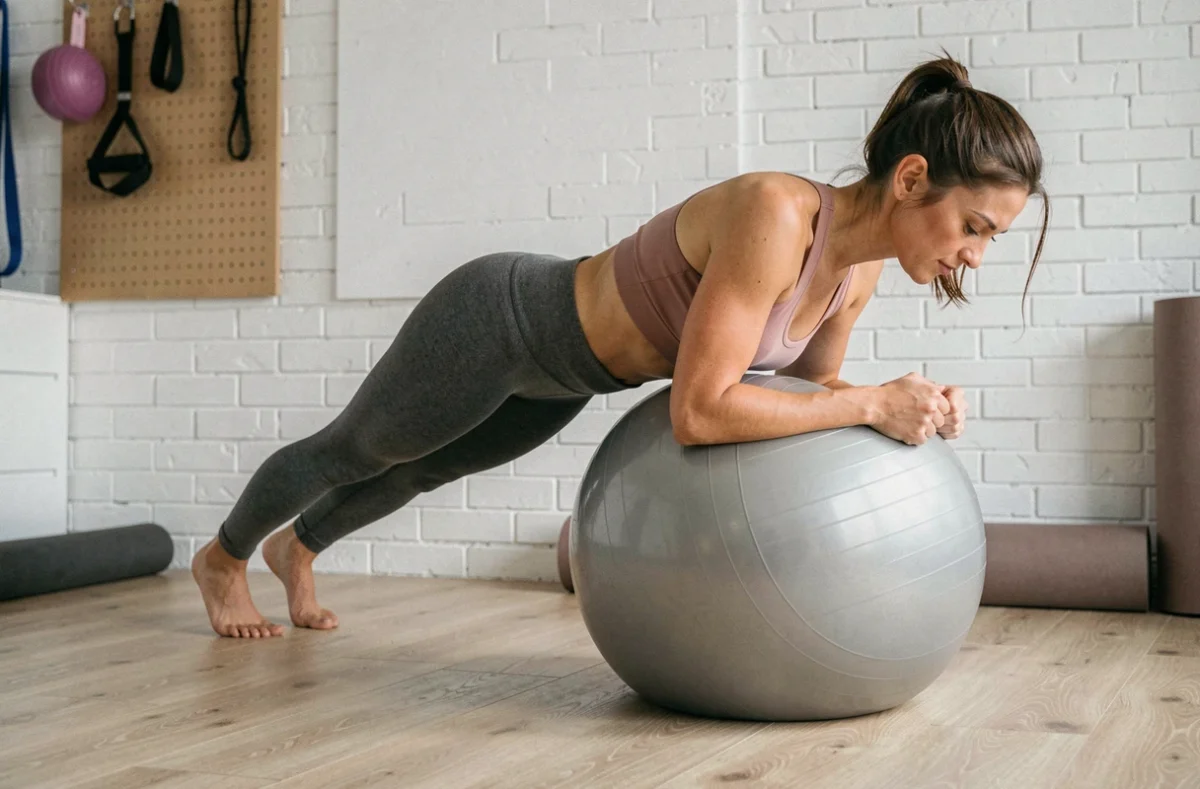
Front Plank with Hands on Ball
Place your forearms on the ball, feet on the ground, body aligned from shoulders to heels. Hold the position while preventing the ball from rolling. Keep the pelvis neutral to protect the lower back. Hold for several tens of seconds, then release.
Reverse Crunch with Feet on Ball
Lie on your back, pinching the ball between your calves and the back of your thighs. Bring your knees toward your chest while lifting your pelvis off the ground. The movement is short, controlled, and targets the lower abdominals.
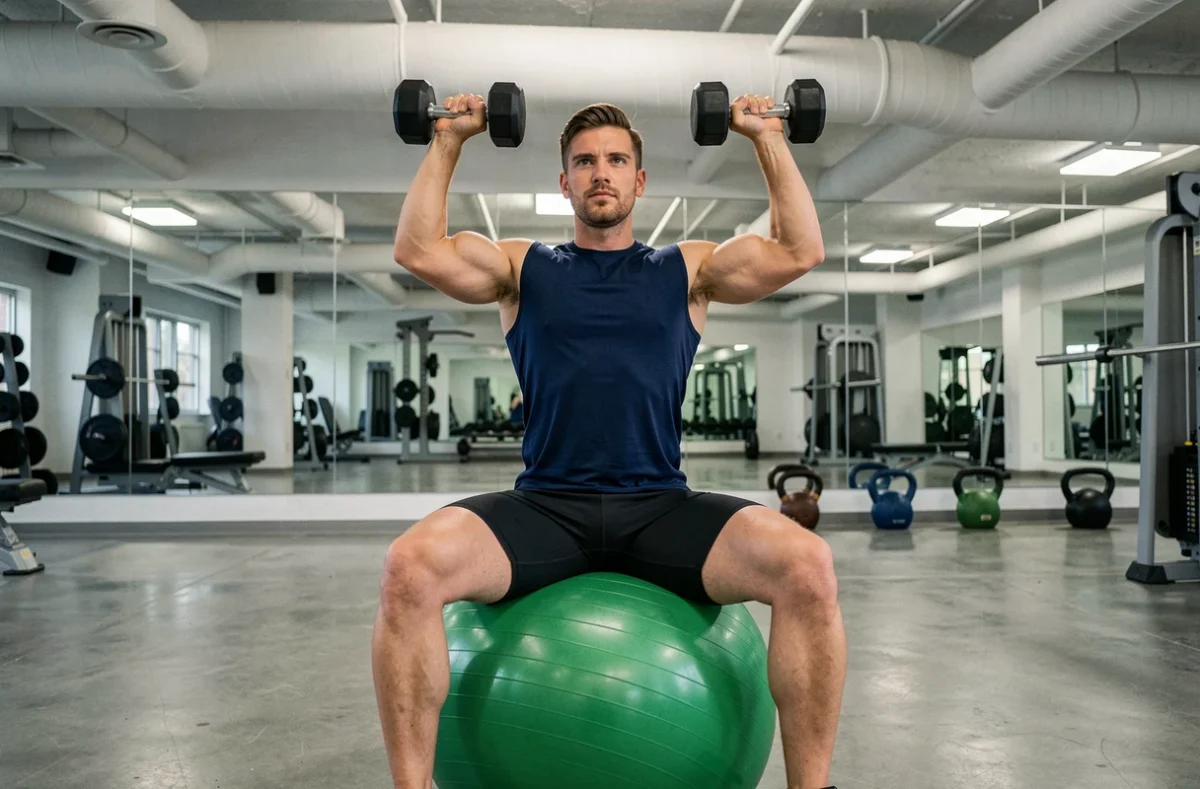
Torso Rotation Sitting on Ball
Sitting on the ball, feet flat, extend your arms in front of you (hands together or holding a small weight). Rotate your torso to the left and then to the right while keeping the pelvis still. The effort comes from the obliques, not from the momentum of the arms.
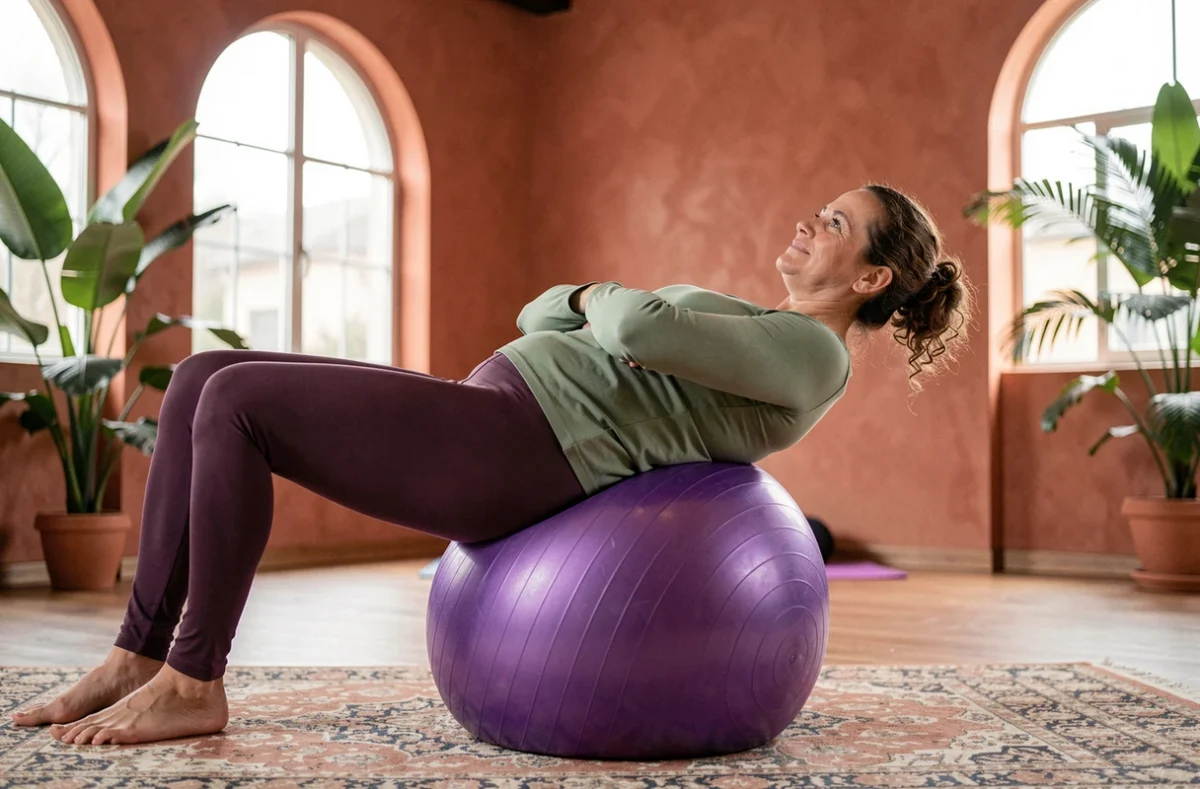
Back Extension on Ball
Stomach on the ball, feet braced against a wall, hands behind your head. Lift your torso by contracting your back muscles, then lower slowly. This movement strengthens the spinal erectors, often overlooked in traditional workouts.
Pike
In a plank position, shins on the ball, push your hips toward the ceiling while keeping your legs straight. The ball rolls toward your hands. Return to the starting position. This exercise combines deep core work and shoulder engagement.
Three Ball Exercises to Tone Legs and Glutes
The ball does not replace a loaded barbell for the thighs, but it adds a balance component that activates the stabilizing muscles of the hip and knee.
Glute Bridge with Feet on Ball
Lie on your back, heels on the ball. Lift your pelvis until you form a straight line from shoulders to feet. Squeeze your glutes at the top of the movement for two seconds before lowering. The difficulty increases if you use only one leg.
Leg Curl Lying Down
Same starting position as the bridge. Once the pelvis is lifted, bring the ball toward you by bending your knees, then push it back out. This movement targets the hamstrings with surprising intensity for a bodyweight exercise.
Wall Squat with Ball
Place the ball between your back and a wall. Lower into a chair position, thighs parallel to the ground, knees above the ankles. The ball guides the movement and protects the lower back. Hold the position or perform repetitions.
Two Ball Exercises for the Upper Body and Overall Balance
Push-Ups with Hands on Ball
Hands on the ball, arms extended, feet on the ground. Bend your elbows while keeping your body engaged. The instability of the ball recruits the shoulder muscles and serratus anterior much more than a classic push-up. Start with your knees on the ground if the movement is too difficult.
Side Plank with Hip on Ball
Lie on your side, hip resting on the ball, forearm on the ground. Lift your pelvis to align your body from head to feet. Hold the position. This exercise works the obliques, gluteus medius, and shoulder stability simultaneously.
Structuring a Session with a Gym Ball
Performing ten exercises without logic leads to fatigue, not necessarily results. For a coherent session, group movements by area and follow a few simple principles:
- Start with core exercises (plank, pike) that require the most neuromuscular control while you are fresh
- Follow with lower body movements (bridge, leg curl, wall squat) where trunk fatigue won’t limit the quality of the movement
- Finish with upper body (push-ups, side plank) and rotations, which are less demanding in overall coordination
- Plan for two to three sessions per week, with at least one rest day between each session
Adjust the number of repetitions to your level. Three sets of eight well-executed repetitions are better than five rushed sets. The quality of the movement takes precedence over volume, especially on an unstable surface where postural compensation is a risk with each fatigued repetition.
The gym ball does not turn a living room into a weightlifting gym. However, it offers proprioception and core stability work that is hard to replicate with other home accessories. Choose three or four exercises from those listed, master them, and then gradually add the others. Progress on the ball is first measured by the stability of the movement, not by the number of repetitions.