Mastering conversions in the kitchen is essential for successfully executing recipes, especially when faced with instructions from different measurement systems. The ability to accurately convert liquids from cups to milliliters, weights from grams to ounces, and temperatures from Celsius to Fahrenheit can be the difference between a delicious dish and a culinary disaster. Whether one is a passionate amateur or a seasoned professional, understanding these equivalences is fundamental for adapting recipes, respecting dosages, and adjusting cooking times, thus ensuring the success of every culinary adventure.
Essential conversions in the kitchen: mastering liquids and weights
In the kitchen, a realm of accuracy and precision, conversions of liquids and weights leave no room for approximation. Converting 1/4 liter to ml becomes child’s play when one knows that one liter equals 1000 milliliters. This conversion rule is fundamental, as the accuracy of liquid measurements, whether it be milk, water, or broth, determines the balance of flavors and the texture of preparations. Mastery of measurement units such as milliliters (ml) and liters (l) is therefore essential for faithfully following a recipe and ensuring the success of each dish.
Rigorous attention is also required in weighing solid ingredients. The transition from grams to kilograms, or vice versa, must be done with strict care. Know that 1 kilogram equals 1000 grams; this knowledge is fundamental for accurately measuring flours, sugars, and other dry components. A margin of error, even a small one, can alter the final result, particularly in baking, where precision reigns.
The kitchen, a science of exactness and the art of taste, demands that chefs have an intimate understanding of these measurement units. The conversion chart thus becomes an indispensable ally, allowing for easy transitions between metric and imperial systems. For cooks, the art of conversion is as fundamental as knife skills or knowledge of cooking methods. In this universe where every detail counts, take the time to acquire and perfect these essential skills.
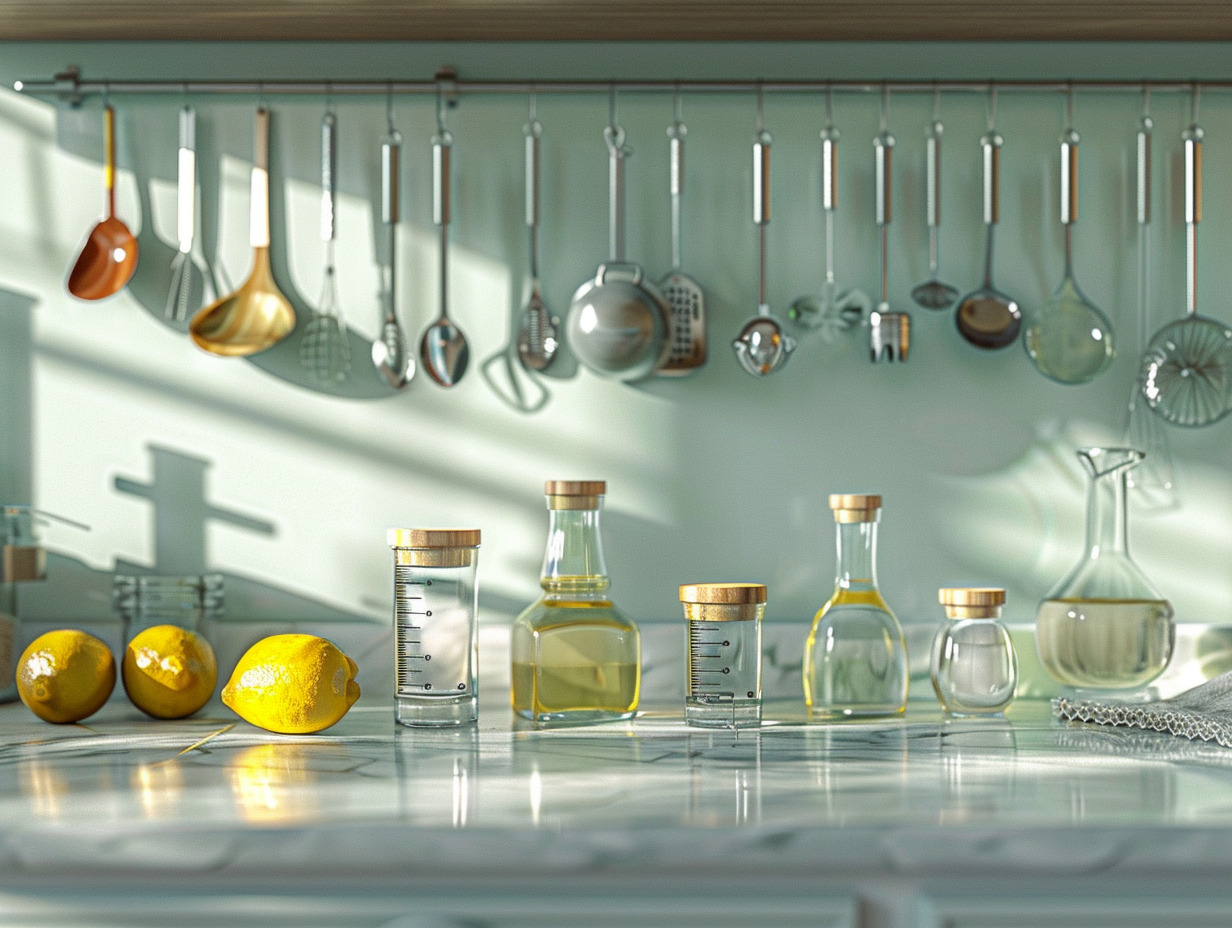
Understanding and applying temperature conversions for perfect cooking
Temperature is the cornerstone of successful cooking, with a degree too high or too low capable of turning a tender piece of meat into a dry and tough morsel. Mastering the equivalences between degrees Celsius and Fahrenheit becomes crucial for cooks who encounter varied recipes, often from different measurement systems. Remember that water freezes at 0°C or 32°F and boils at 100°C or 212°F; these reference points are beacons for navigating between the two scales.
In this conversion exercise, the oven thermostat, often mentioned in European recipes, adds a layer of complexity. A thermostat setting of 1 corresponds to 30°C or 86°F while a setting of 9 equals 270°C or 518°F. Having a conversion chart or an automated converter simplifies adapting instructions and ensures fidelity to the temperatures prescribed by a recipe, whether listed in degrees Celsius, Fahrenheit, or by thermostat.
Modern technology offers sophisticated tools, ranging from mobile apps to digital cooking thermometers, all equipped with conversion functions. These devices allow for instant and precise readings, adapting temperature measurements to the desired scale. Using these technological aids is recommended to avoid conversion errors that could compromise the quality of the prepared dishes. Be ready to embrace these innovations, as they represent valuable instruments for perfecting your culinary skills and making every kitchen experience as reliable as it is delicious.