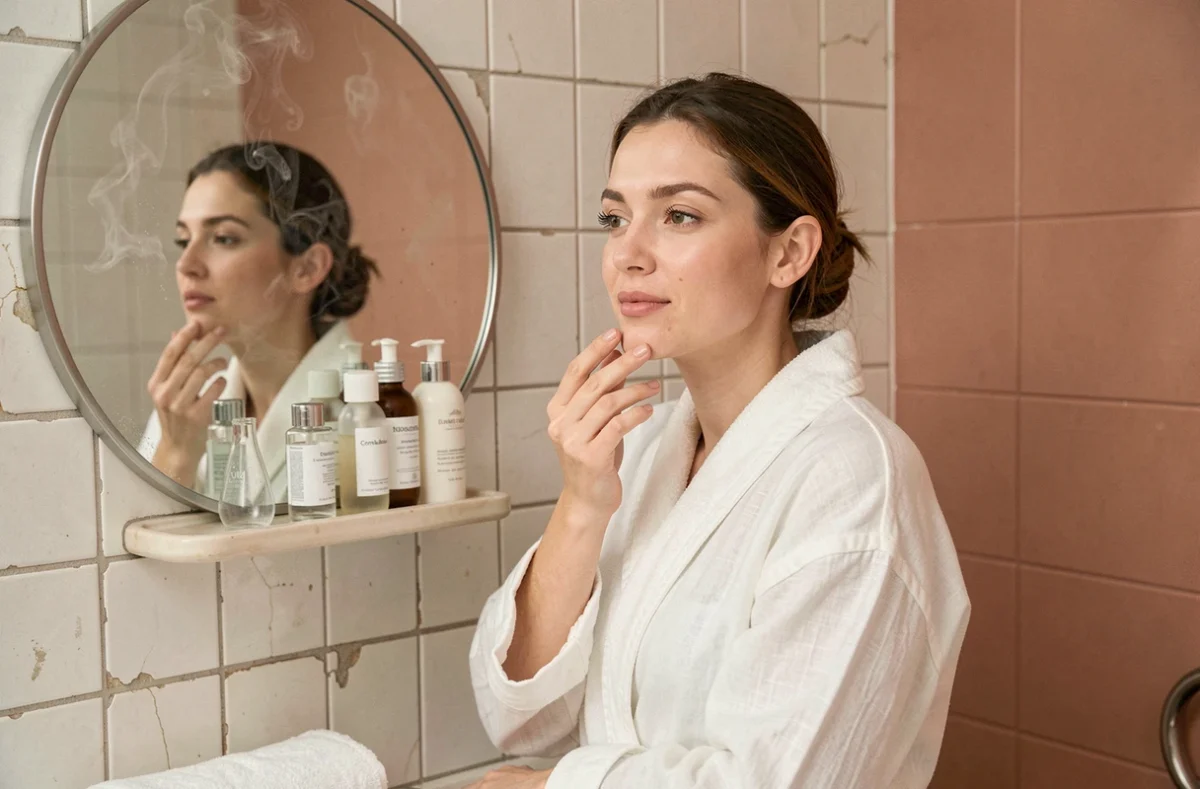
Everyday beauty relies on targeted steps, but most routines shared online start from an assumption that is rarely questioned: that skin can tolerate anything. When the skin reacts to the slightest change in texture or pH, standard advice can do more harm than good. Adapting your beauty routine without piling on products means understanding what your skin actually tolerates, rather than following a one-size-fits-all five-step regimen.
Sensitive skin routine: what a universal regimen fails to account for
Routines presented as universal follow a fixed sequence (cleanser, toner, serum, moisturizer, SPF). This approach works for combination to normal skin, but creates a real problem for reactive skin: each additional layer introduces ingredients that could cause irritation.
Using fewer products protects the skin barrier better than layering multiple treatments. A gentle sulfate-free cleanser, a moisturizer with hyaluronic acid or ceramides, and mineral sunscreen are enough to cover the three basic functions: cleanse, moisturize, protect.
To explore options suited to each skin type, Make Up Me’s beauty section covers techniques and formulas suitable for even the most demanding skin.
A common pitfall is adding a chemical exfoliant (AHA, BHA) because it is recommended for a radiant complexion. For skin prone to rosacea or eczema, an improperly dosed exfoliant can worsen inflammation instead of reducing it. It is better to exfoliate no more than once a week, using a low concentration, and monitor your skin’s response for two weeks before making any changes.

Comparing beauty routines: normal, sensitive, and acne-prone skin
| Daily step | Normal skin | Sensitive skin | Acne-prone skin |
|---|---|---|---|
| Morning cleanse | Foaming cleanser or micellar water | Thermal spring water or no-rinse cleansing milk | Soap-free, pH-neutral cleansing gel |
| Moisturizing | Light moisturizer or serum | Fragrance-free moisturizer rich in ceramides | Non-comedogenic fluid with a gel texture |
| Sun protection | SPF 30 chemical or mineral sunscreen | SPF 50 mineral sunscreen (zinc oxide) | Oil-free SPF 30 fluid |
| Exfoliation | 2 to 3 times a week (AHA/BHA) | Once a week at most, low concentration | Twice a week (salicylic acid BHA) |
| Face oil | Jojoba or rosehip oil | Calendula or oat oil | Avoid, except for hazelnut oil (non-comedogenic) |
This table highlights a point that is often overlooked: the same step needs to be adapted to each skin type. Cleansing, for example, serves a different purpose for oily skin (controlling sebum) than for sensitive skin (preserving the skin’s hydrolipidic film). Using the same foaming cleanser for both means treating two opposite concerns with the same tool.
Diet and a naturally radiant complexion: what the evidence shows
Diet has a direct effect on the appearance of the skin, but shortcuts like “eat berries for glowing skin” oversimplify a slower process. Skin cell turnover takes several weeks. Dietary changes will not show on your face for at least a month.
Three nutrient groups have a documented effect on skin quality:
- Omega-3 fatty acids (oily fish, flaxseeds) help maintain cell membrane flexibility and reduce micro-inflammation that appears as redness
- Vitamins A and C (carrots, peppers, citrus fruits) support collagen production and protect against oxidative stress
- Zinc (seafood, legumes) plays a role in wound healing and sebum regulation, making it beneficial for acne-prone skin
Staying hydrated internally complements external hydration. Even a high-quality moisturizer cannot make up for not drinking enough water. Water helps transport nutrients to skin cells and remove metabolic waste.
Minimalist skincare: three steps that replace ten products
The cosmetics industry encourages adding more steps, but layering products does not benefit the skin. Once you apply more than three or four products in succession, absorption decreases and the risk of cross-reactions increases.
An effective minimalist routine comes down to three steps:
- Cleanse once in the evening (double cleansing is only necessary to remove heavy makeup or water-resistant sunscreen)
- Moisturize morning and evening with a product containing no more than around ten ingredients, to limit potential allergens
- Wear sunscreen every day, including in winter and on overcast days, because UV rays pass through clouds and accelerate skin aging
One well-chosen product is better than five that do not work well together. A consistent routine matters more than the number of steps. Checking the INCI list (International Nomenclature of Cosmetic Ingredients) on each product can help you spot common irritants: denatured alcohol, synthetic fragrances, and sodium lauryl sulfate.

Adjust your beauty routine for the seasons without changing everything
The change from one season to another affects two factors that have a direct impact on the skin: ambient humidity and UV exposure. In winter, dry air (heated indoor spaces and cold winds) dehydrates the skin’s surface. In summer, heat stimulates sebum production and increases perspiration.
Seasonal adjustments do not require replacing your entire routine. In most cases, changing just one product per season is enough. In winter, swap a lightweight fluid for a richer cream. In summer, switch from SPF 30 to SPF 50 and replace the rich cream with a hydrating gel.
For sensitive skin, make these transitions gradually. Introducing the new product every other day for a week lets you assess how well your skin tolerates it without triggering a sudden reaction. This cautious approach is the guiding principle of an everyday beauty routine that preserves the skin’s balance rather than disrupting it.