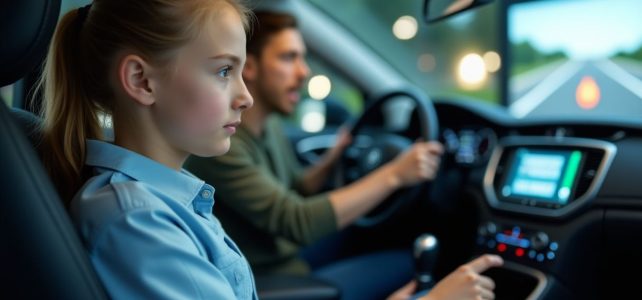
Obtaining a driver’s license is often seen as a rite of passage to freedom and independence. However, before being able to hit the roads safely, many future drivers must undergo a series of assessments known for their complexity. Psychotechnical tests, in particular, play a central role in this process by allowing the evaluation of candidates’ reflexes, concentration, and psychomotor skills.
These tests are not just a selection tool, but also a guarantee that potential drivers possess the necessary skills to react appropriately to the hazards of the road. In France, this mandatory step often causes anxiety for candidates, but also curiosity for those who wish to learn more about the mechanisms of these evaluations.
What is a psychotechnical test for the license?
Psychotechnical tests for the license are designed to assess the mental and psychomotor skills of candidates. They primarily serve to verify whether future drivers have the necessary capabilities to drive safely.
- Reflex evaluation: The tests measure the speed of reflexes, essential for avoiding accidents.
- Concentration and vigilance: Concentration exercises assess the candidate’s ability to remain alert over long periods.
- Psychomotor coherence: Good coordination between the brain and movements is fundamental for mastering a vehicle.
- Stress resilience: Driving often involves managing stressful situations. Therefore, the tests evaluate how a candidate reacts under pressure.
Why take a psychotechnical test for the license?
The need to take a psychotechnical test for the license can arise for various reasons, often imposed by authorities, but also chosen by candidates themselves to assess their own skills.
When the driver’s license has been revoked or suspended, drivers often must take a psychotechnical test for the license before they can recover it. This evaluation aims to prevent recidivism by ensuring that the driver is fit to return to the road.
Professionals, such as bus or truck drivers, are also subject to these tests to ensure they can drive safely over long distances and in potentially challenging conditions.
Finally, some candidates voluntarily choose to take a psychotechnical test to assess their abilities before taking the practical exam, in order to increase their chances of success.
Preparation for psychotechnical tests: Tips and strategies
Approaching these tests with confidence requires adequate preparation. Several strategies can help maximize performance.
Candidates should first understand the types of tests they will face. This includes reflex, coordination, and concentration exercises. By immersing themselves in simulated situations, they can better anticipate the questions and exercises presented.
Regular practice can significantly improve skills. Digital tools, such as apps and video games, can help refine reflexes and hand-eye coordination while providing a fun approach to training.
Finally, stress management is a key element of success. Relaxation techniques, such as meditation or deep breathing, can help maintain an optimal level of calm during the exam.
Impact of psychotechnical tests on road safety
The integration of psychotechnical tests into the driver’s license acquisition process has a significant impact on road safety. These evaluations contribute not only to reducing the number of accidents but also to promoting a culture of responsible driving.
- Reduction of accidents: By identifying at-risk drivers even before they obtain their license, the chances of dangerous behaviors on the road are limited.
- Increased awareness of personal capabilities: The tests raise candidates’ awareness of their own strengths and weaknesses, encouraging more cautious driving.
- Promotion of responsible driving: Candidates who have recognized the importance of vigilance and reflexes are more likely to adopt behavior that respects safety rules.
- Technological adaptation: With the evolution of modern vehicles, psychotechnical tests adapt to evaluate the ability to interact with assisted driving systems.