
The term “top” refers to any garment covering the bust, from the shoulders to the hips. The crop top, on the other hand, is a top whose cut stops above the waist, revealing part of the belly. The distinction is based on a single technical criterion: the length of the piece in relation to the waistline.
Layered crop top: the cut that changes the comparison
Fashion guides often compare the top and the crop top by opposing “full coverage” against “visible belly.” This reading oversimplifies the reality of current cuts.
The recent trend shifts the crop top towards a role of layering piece. The models favor loose proportions, boxy cuts, and dropped shoulders. Worn under an open shirt, a structured jacket, or over a long tank top, the crop top sometimes reveals no skin at all.
This evolution blurs the classic boundary between the two garments. A boxy crop top worn as a mid-layer visually resembles a fitted short top, without fulfilling the same function. The standard top remains a standalone piece, worn alone. The contemporary crop top increasingly functions as a compositional element in a multi-layered look.
Before buying, it’s better to ask whether the piece will be worn alone or combined. To distinguish between top and crop top in a shopping context, this usage criterion weighs as much as the length displayed on the label.
Top length and bottom height: the duo that defines style
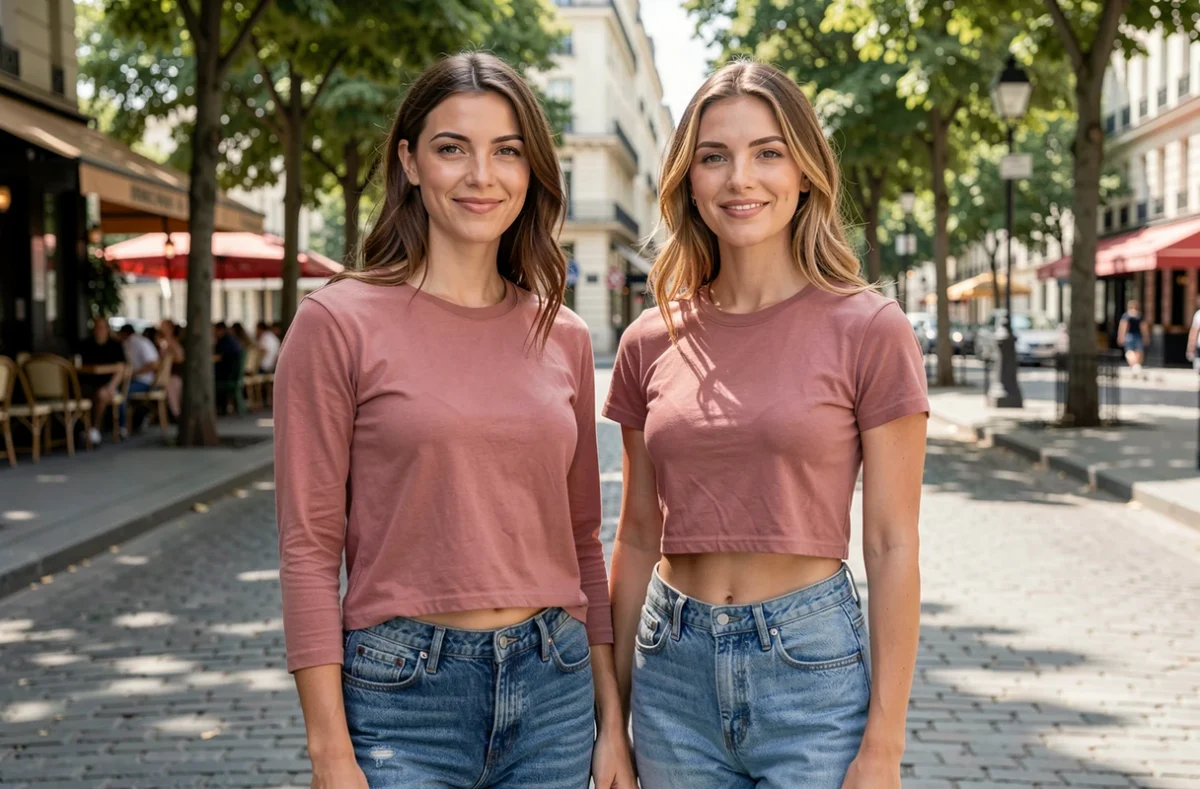
Focusing solely on the top is a common mistake. The height of the bottom is just as important as the look of a crop top. The same short model paired with high-waisted pants reveals only a strip of skin a few centimeters wide. The same model with low-rise jeans produces a radically different effect.
The classic top, on the other hand, remains visually stable regardless of the chosen bottom. Its length covers the waistband of the pants or skirt, neutralizing the impact of the waist height. This is an advantage in professional or formal contexts: there’s no need to calculate the combination.
How to test the compatibility between a short top and bottom
- Raise your arms in front of a mirror: if the crop top rides up above the ribs, the gap of skin will be too visible with a mid-rise bottom
- Sit down and check that the fabric does not compress the waist or roll up, a sign that the cut is not suitable for prolonged wear
- Test with the intended bottom: a crop top that works with high-waisted pants may disappoint with a standard-waist skirt
This movement test is a better indicator than the size label. Comfort in a seated position and in motion distinguishes a good purchase from a garment that will end up at the back of the closet.
Classic top or crop top: concrete usage contexts
The top covers from the collar to the hips. It can be worn alone in any situation without requiring thought about the bottom or layering. This is its strength: it works by default.
The crop top requires an active choice. The shortened length imposes thinking of the look as a whole, not as a stack of separate pieces. This is neither a flaw nor an advantage; it is a different clothing logic.
When to favor the top
In professional contexts, formal meetings, and situations where the dress code is vague. A fitted round-neck top remains the most neutral choice for these occasions. The fabric falls below the waistband, avoiding any questions of compatibility with the bottom.
When the crop top has the advantage
In casual wear, at parties, or in sports contexts, the crop top brings a different proportion to the silhouette. Paired with high-waisted bottoms, it visually elongates the legs by raising the visual cutoff point of the bust.
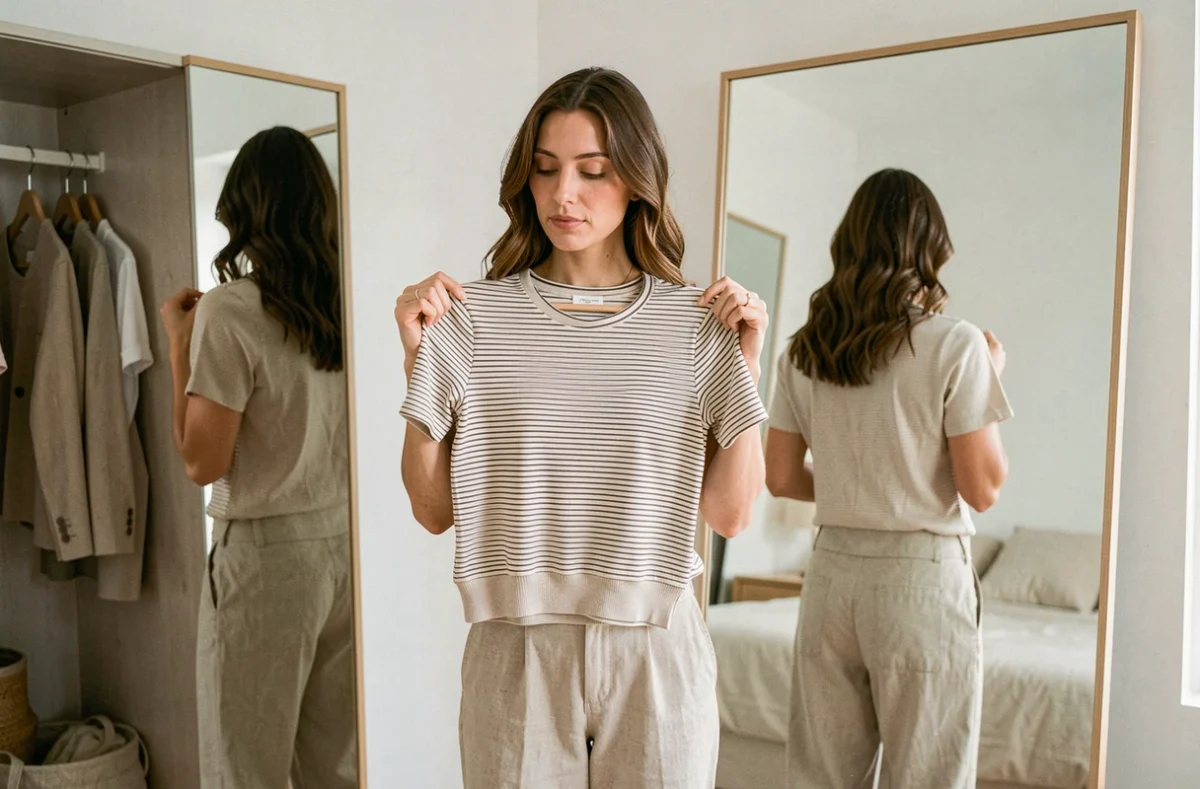
Boxy-cut models with dropped shoulders, stemming from streetwear, also work for urban outings without aiming to expose the belly. The crop top is no longer reserved for fitted or summer looks.
Fitted cut or boxy cut: the forgotten criterion in the choice
Most comparisons between tops and crop tops overlook a parameter that changes everything: the width of the cut at the bust and shoulders.
A fitted crop top emphasizes the waist and shapes the silhouette. This is the classic model found in guides focused on body types. A boxy crop top, short but loose, produces the opposite effect: it structures the upper body without molding it, and creates volume at the shoulders.
The classic top offers the same variety, but its length diminishes the visual differences between fitted and straight cuts. On a crop top, every extra or less centimeter of fabric is more noticeable because the piece is short.
- Fitted cut: highlights the waist, suitable for silhouettes that want to mark the bust-hips separation
- Boxy cut: visually broadens the shoulders, balances triangle silhouettes (hips wider than shoulders)
- Draped or fluid cut: softens the lines, works in layering under an open jacket or blazer
Choosing between a top and a crop top without considering this dimension is like comparing two garments on a single axis. Length separates the two categories, but the cut determines the effect on the silhouette.
The final choice depends less on current fashion than on how the piece will be worn daily. A well-paired crop top with an appropriate bottom can cover as much as a poorly cut top. Length alone does not tell the whole story of the garment.